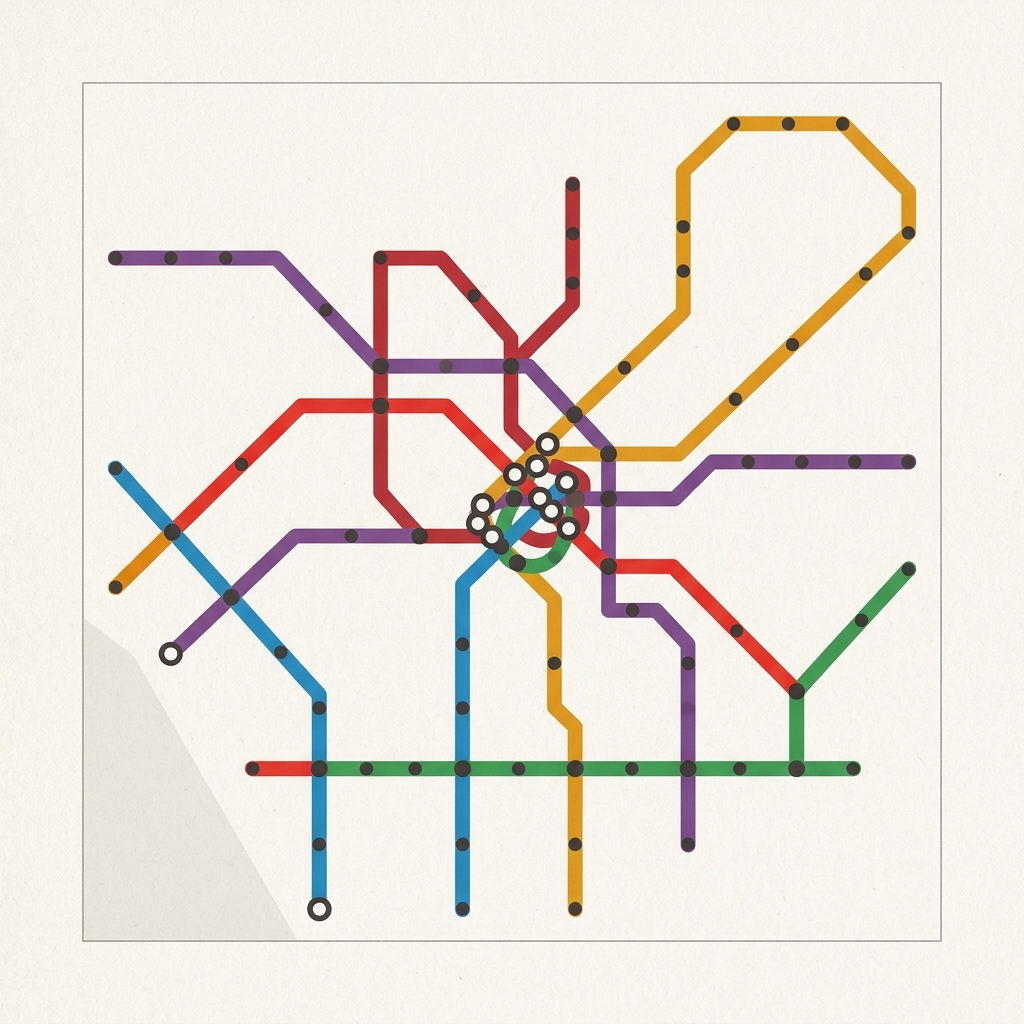
In 43 days, the D Line Purple Line Extension opens Phase 1, pushing the subway from Wilshire/Western to Wilshire/La Cienega. It's the first of three phases that will connect to the Olympic Village in West LA by 2027. But with federal funding approved and 18 of 28 Olympic transit projects still on track, ten others are slipping past the finish line. Here's what the opening actually means for Games readiness.
Metro's D Line extension is the spine of the Olympic rail plan. Phase 1 opens May 8, 2026 with four new stations: Wilshire/La Cienega, Wilshire/Fairfax, Wilshire/Vine, and Wilshire/Western to Wilshire/La Cienega. That brings subway service deeper into mid-Wilshire and sets up the next push westward.
Phase 2 reaches Century City by late 2026, adding stations at Wilshire/Spaulding, Wilshire/San Vicente, and Century City/Santa Monica Boulevard. That phase connects to the Constellation station development and ties into parking and venue access for the Olympic sites.
Phase 3 arrives by 2027, pushing the line to the VA/UCLA campus in West LA. That's the connection to the Olympic Village — athletes won't need buses from a transit hub, they can walk from the platform. The Village site sits at the terminus of the line, making the D Line critical to the entire Olympic operations plan.
In February 2026, Congress approved $94.3 million in federal funding for Olympic mobility projects. The money covers station upgrades, accessibility improvements, mobility hub development, and operational support for the Games. It's real money for real infrastructure, but it's not the $2 billion California's delegation was asking for.
The funding gap matters. LA Metro can build the stations, but the question of how many additional buses, drivers, and service hours the region will actually deploy in summer 2028 still depends on money that hasn't been committed yet. The $94.3 million covers station access. Getting spectators from those stations to venues is a different line item.
While the D Line focuses on West LA and the Village, the K Line expansion to Inglewood is on a parallel track. The LAX people mover — the final connection from the airport to the Olympic transit network — opens in June 2026, just ahead of the World Cup and well before the Olympics.
That timing is essential. It means visitors landing at LAX can ride the people mover to the K Line, then connect to SoFi Stadium for World Cup matches. By the time the Olympics begin, the entire chain from airport to venue will have run through a major international event dress rehearsal.
Metro's official list includes 28 transit improvement projects intended to be complete by 2028. The count breaks down this way:
18 projects are expected to open before or during the Games. These include the D Line phases, the K Line, the LAX people mover, bus lane networks, mobility hubs, and station improvements across the Metro system. These are the pieces that will actually function during the Olympics.
10 projects are now scheduled to open after 2028. Some are relatively minor — parking structure upgrades, additional bike lane segments, secondary access improvements. Others are more significant, like certain bus rapid transit corridors and additional rail extensions that were originally planned to debut in 2028.
That shift matters strategically. It means the Olympic transit network will work, but it won't be the full, final network. Some relief valves and backup routes that would have helped manage surge demand are being pushed into 2029 and 2030. The system will carry spectators — it has to — but with less redundancy than originally designed.
The ten projects falling behind schedule reflect three problems. First, federal funding came in lower and later than anticipated. Second, labor and construction costs in Southern California have climbed faster than budgets grew. Third, some projects hit environmental reviews or local opposition that extended timelines.
None of these surprises are unique to LA. Every major city hosting an Olympics faces construction schedule pressure. But it's worth noting: the projects that are staying on track are mostly rail-based (D Line, K Line) and people-mover infrastructure (LAX). The projects slipping are often the last-mile pieces — bus routes, secondary stations, parking integrations — that matter to individual spectators but not to the headline narrative.
If you're coming to the Olympics, center your plan around the D Line, K Line, and LAX people mover. These are locked in. Get to a major station, and you can reach most venues. The bus network will supplement rail, and shuttles will fill gaps, but the rail backbone is real.
The May 8 opening of the D Line Phase 1 validates that Metro can execute. The subway construction in a dense urban environment on a compressed timeline is hard. Getting it done shows the organization has the muscle to pull off the Games transportation piece. The fact that some smaller projects are being postponed past 2028 isn't a failure — it's a reasonable trade-off between quality and schedule.
May 8 marks the first visible completion of the Olympic rail plan. By late 2026, the D Line will punch through to Century City. By 2027, the Village will have direct subway access. The K Line and LAX people mover will be running. Eighteen of 28 projects will be operational. That's a functional Olympic transit system, even if it's not the originally envisioned complete network. The ten projects delayed to 2029 are the polish, not the foundation. LA will be ready.